
A Quality Engineer works as a cross-functional team member with Engineering, Product Development, Manufacturing, Quality, Metrology and Supply Chain to help maximize quality while improving efficiency and reducing variability.
- Use quality management to drive customer satisfaction
- Use quality control to ensure products meet customer, regulatory, and internal standards
- Use qualitative and quantitative tools to analyze process performance and drive improvement
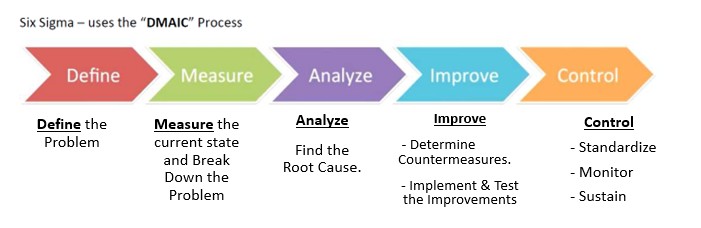
- Use Lean and Six Sigma methods for continuous improvement
Quality Management
- Plan and Maintain the Quality Management System
- Define Inputs and Requirements for:
- Customer
- Product
- Process
- Regulatory
- Audits and gap assessments
- Reviews to verify input requirements are addressed in design
- Voice of the Customer – Customer Satisfaction, Complaints, Returns, External Failures.
- Voice of the Process – Nonconforming materials, Defects, Scrap, Right the First (RFT), First Pass Yield (FPY), Production Rate, Downtime, OEE.
- Cost of Quality / Cost of Poor Quality
- Prevention costs
- Appraisal costs
- Internal Failures
- External Failures
Process Design
Build quality into the process at all stages of the Life Cycle.
- Inputs:
- User Requirements (Customer)
- Product – Define Critical Quality Attributes
- Process – Critical Process Parameters
- Regulatory Requirements.
- Risks Management: dFMEA, pFMEA
- Process Flow, P&IDs, Layouts
- Design Reviews – verify input requirements are addressed in design
- Specifications
- Change Control
- Qualification and Validation
- Reliability and Maintainability
Process Control
- Control Plans
- Procedures and work instructions
- Material & Supplier Controls
- Acceptance Sampling
- Metrology and Measurement System Analysis
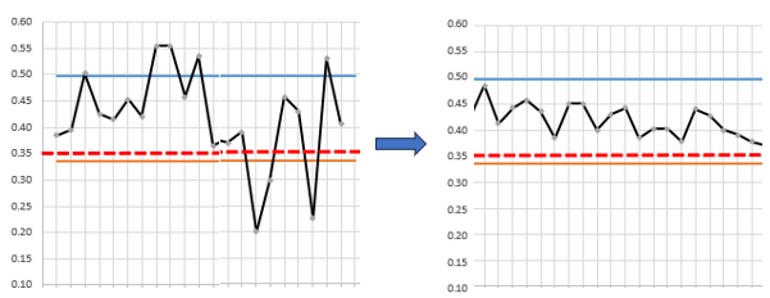
- Statistical Process Control and Process Capability
Process Improvement
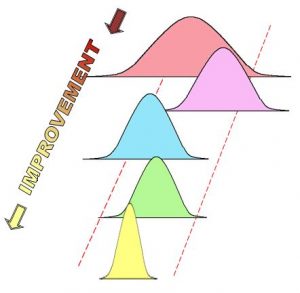
Quantitative Analysis
- Descriptive Statistics:
- Data Types: Continuous (Variable) or Attribute (Descriptive) data
- Central Tendency: Mode, Median, Mean
- Dispersion: Variance, Standard Deviation, Range
- Data collection
- Data accuracy and integrity
- Data Visualization:
- Pareto
- Histogram
- Charts (Run chart, Bar, Pie)
- Box & Whisker
- Scatter plots
- Stratification
Statistical Process Control (SPC)
- Sampling and Rational Sub-grouping
- Control charts
- Process capability studies
- Process performance vs specifications
Statistical Decision-Making
- Inferential Statistics / hypothesis tests (Z-test, t-test, F-test)
- Paired-comparison tests
- Goodness-of-fit tests
- Analysis of variance (ANOVA)
- Linear regression
Design of Experiments (DOE)
Designed experiments can be useful when multiple process input factors can impact an output (response). Through planned treatments of multiple input factors, their interactions and effects on the output (response) can be determined.
- Planning: Define the problem and response variable(s)
- Selection of Controllable Factors (independent variables)
- Selection of Levels and Treatments to test
- Experiment Design: Size or Quantities, Replicates, Run Order
- Analysis of Results
- Main Effects and Interactions
- Statistical significance of effects of the interactions
- Determine Optimal Process Settings
Risk Management
- Risk Identification
- Risk Analysis
- Risk Evaluation
- Risk Treatment
- Avoid
- Mitigate
- Reduce probability of occurrence
- Reduce magnitude of the impact
- Eliminate probability of occurrence (Design change)
- Transfer
- Accept (with contingency plan)
- Risk monitoring